
 Tower, Iris Bay - Office 1705 - Al Mustaqbal St - Business Bay - Dubai

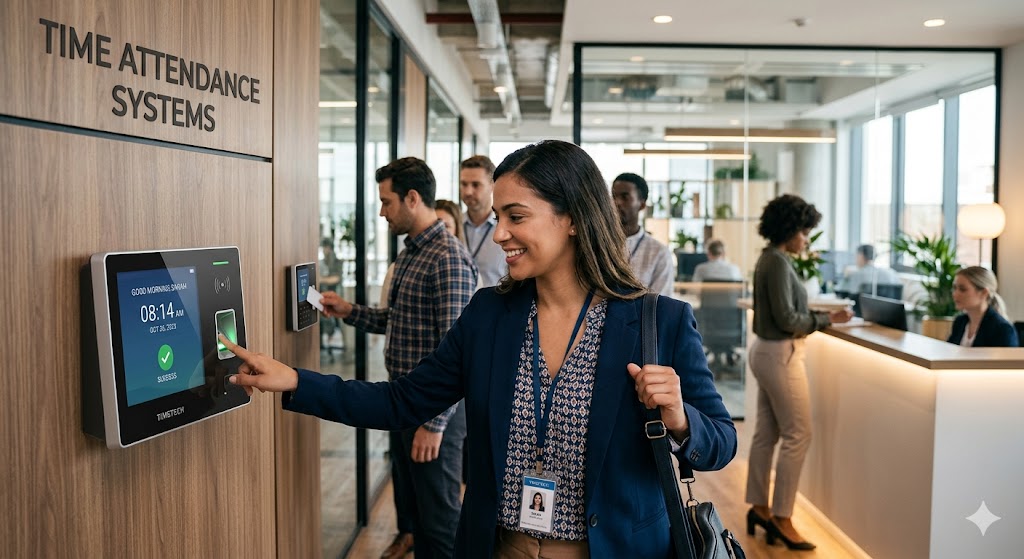
THE FOUNDATION OF MODERN WORKFORCE TRACKING
Maximizing Workforce Efficiency: The Ultimate Guide to Modern Time Attendance Systems
In the rapidly evolving landscape of modern business operations, workforce management has emerged as a cornerstone of organizational success. Among the various pillars of resource management, tracking when employees arrive, leave, and execute their duties stands out as both a fundamental necessity and a logistical challenge. Traditional methods of logging hours—such as manual sign-in sheets, mechanical punch cards, and trust-based honor systems—are swiftly becoming obsolete. In their place, sophisticated automated frameworks known as Time Attendance Systems have taken center stage.
For forward-thinking organizations, implementing a robust time tracking ecosystem is no longer merely an administrative option; it is a strategic imperative. As companies seek to optimize operational workflows, reduce overhead costs, and foster a culture of transparency, partnering with premier system integrators like Dar Al Montazah Technical Services LLC ensures that businesses deploy state-of-the-art infrastructure tailored to the specific security and operational dynamics of the region.
The Evolution of Time Tracking: From Paper to Biometrics
The journey of time attendance monitoring is a testament to technological progression. For decades, businesses relied heavily on paper ledgers. While straightforward, these manual processes were deeply flawed, highly susceptible to human error, intentional manipulation, and substantial administrative lag. The introduction of mechanical punch clocks offered a minor upgrade, yet they introduced new vulnerabilities, most notably “buddy punching”—a practice where one employee clocks in on behalf of an absent or late colleague.
Today, the integration of digital technology, the Internet of Things (IoT), and cloud computing has completely revolutionized this space. Modern architectures leverage secure biometrics, facial recognition, radio-frequency identification (RFID), and global positioning systems (GPS) to record attendance data with absolute precision. These advanced systems capture real-time information, securely logging data points that cannot be falsified, shared, or misplaced. This shift from passive recording to active, verifiable authentication forms the backbone of secure corporate environments.
Key Types of Modern Time Attendance Infrastructure
Organizations today can choose from a diverse array of hardware and software configurations depending on their specific security thresholds, workforce mobility, and operational environments. Understanding these variants is essential for selecting a framework that aligns with long-term corporate goals:
-
Biometric Attendance Systems: Utilizing unique biological traits, biometric systems offer the highest tier of security and verification. Fingerprint scanners remain highly popular due to their cost-effectiveness and ease of deployment. However, facial recognition systems and iris scanners are rapidly gaining market share, providing touchless, highly secure validation that is ideal for high-traffic environments and modern hygiene standards.
-
RFID and Proximity Card Systems: Ideal for corporate offices and environments where employees already carry identification badges, RFID systems read embedded smart chips when a card passes near the sensor terminal. This approach is incredibly fast, processing large volumes of employees within minutes during peak shift changes.
-
Web-Based and Cloud Solutions: For organizations managing decentralized offices or remote teams, cloud-based time attendance applications allow employees to log their hours through secure web portals or dedicated mobile apps. These systems often integrate advanced geofencing, ensuring that field technicians or remote sales representatives can only clock in when they are physically present within authorized geographic coordinates.
The Direct Impact on Payroll Accuracy and Cost Control
One of the most immediate benefits of integrating an automated time attendance framework is the radical transformation of the payroll pipeline. Manual payroll compilation is notoriously slow and error-prone, requiring administrative staff to manually calculate overtime, night differentials, paid time off, and unexcused absences. This friction often results in costly processing discrepancies.
Automated systems completely eliminate these administrative bottlenecks. By directly capturing punch data and synchronizing it with centralized payroll engines, platforms deployed by specialized teams like Dar Al Montazah Technical Services LLC seamlessly compute exact billable hours. This precise calculation mitigates the financial leakage associated with rounded-up hours, unauthorized overtime, and human miscalculations. Consequently, businesses experience an immediate reduction in administrative overhead while simultaneously ensuring absolute compliance with local labor regulations regarding working hours and compensation structures.
Mitigating Time Theft and Elevating Employee Accountability
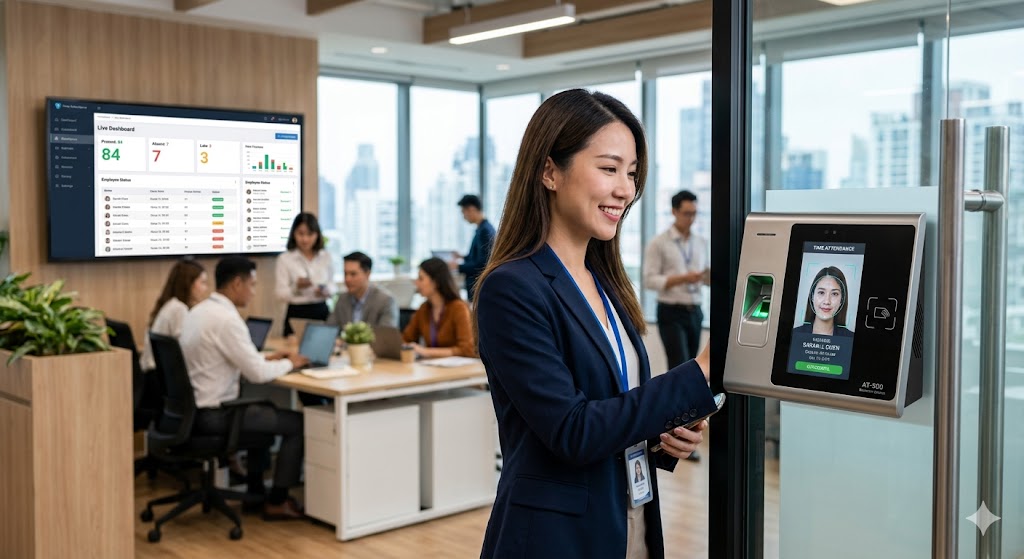
Time theft is an insidious, often underestimated operational drain that subtly erodes corporate profitability. Whether it manifests as extended lunch breaks, late arrivals, early departures, or the previously mentioned practice of buddy punching, the cumulative financial impact can be devastating to an organization’s bottom line. Automated time tracking provides an objective, unalterable record of workforce activity, significantly reducing these inefficiencies.
When employees interact with automated terminals, they are held directly accountable to a transparent system. This visibility shifts organizational culture away from micromanagement and toward data-driven accountability. Employees gain clear, unequivocal visibility into their own attendance histories, reducing disputes with management and cultivating an equitable workplace environment where punctual, dedicated personnel are recognized and rewarded based on verifiable metrics.
Seamless Integration with Enterprise Security and HR Systems
The true power of modern time attendance solutions shines when they transition from standalone devices into fully integrated components of a broader enterprise infrastructure. High-performance setups do not operate in a vacuum; they interface directly with physical access control barriers, security cameras, and human resource information systems (HRIS).
For instance, an integrated biometric terminal can simultaneously unlock a secure turnstile and register an employee’s morning check-in within the HR software. If an individual is not scheduled to work or has not been cleared by security, the system can dynamically deny physical access to the premises. By utilizing the engineering expertise of professional technical integrators like Dar Al Montazah Technical Services LLC, organizations can implement cohesive, unified ecosystems where physical asset protection and workforce compliance are managed through a centralized command interface.
Data-Driven Insights and Strategic Resource Planning
Beyond daily attendance tracking and payroll processing, automated systems serve as an invaluable repository of business intelligence. The continuous accumulation of punch data yields powerful analytical insights into operational trends, absenteeism rates, and workforce capacity limitations. Managers can generate detailed reports to identify recurring patterns of chronic lateness or observe departments experiencing high overtime rates.
These metrics enable leadership teams to execute highly informed workforce planning strategies. For example, if data reveals consistent overtime strains during specific production cycles, management can strategically adjust shift rotations or scale up temporary staffing configurations well in advance. This transition from reactive scheduling to proactive, data-driven workforce engineering optimizes operational efficiency and prevents staff burnout.
Conclusion: Empowering Your Business with Dar Al Montazah Technical Services LLC
Implementing a comprehensive Time Attendance System represents a pivotal step forward in modernizing corporate operations, tightening physical security frameworks, and securing financial bottom lines. The transition away from manual data entry and toward automated, secure validation safeguards companies against payroll inflation, cuts down administrative labor, and provides critical insights needed to scale workforce capacity efficiently.
Navigating the complex matrix of biometric hardware, network protocols, and software integrations requires deep domain expertise. As a trusted leader in advanced commercial infrastructure deployment, Dar Al Montazah Technical Services LLC provides comprehensive, turnkey solutions designed to smoothly implement these systems. By pairing cutting-edge physical security components with elite engineering support, they empower businesses across the region to protect their physical assets, optimize human capital, and confidently drive long-term organizational growth.