
 Tower, Iris Bay - Office 1705 - Al Mustaqbal St - Business Bay - Dubai

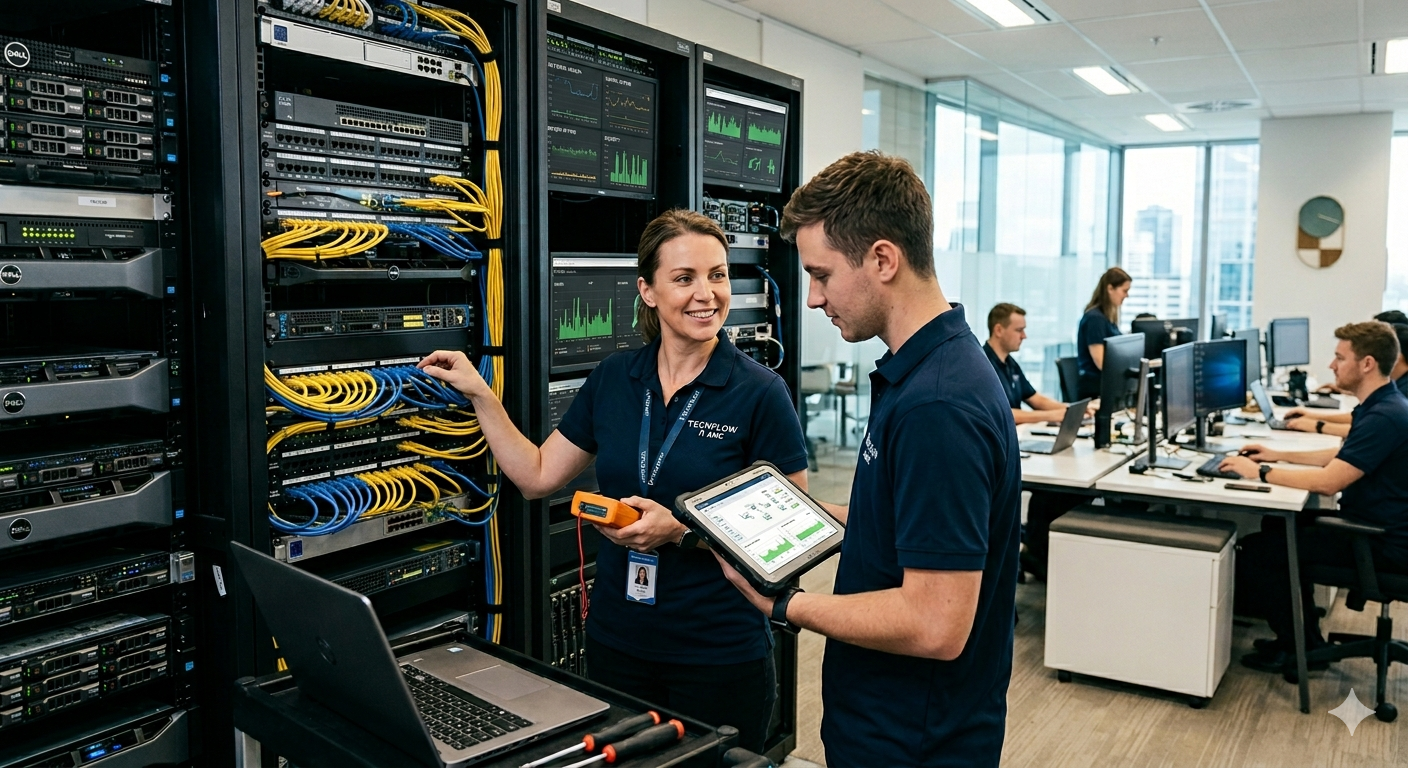
Maximizing Operational Efficiency: The Ultimate Guide to IT AMC Services
PART 1: Strategic Foundations & Core Infrastructure Management
In the contemporary corporate landscape, information technology is no longer just a supportive tool; it is the fundamental engine driving business operations, communication, and competitive strategy. From cloud storage networks and localized servers to individual employee workstations and cybersecurity firewalls, an organization’s digital ecosystem requires continuous upkeep, optimization, and defense. When hardware malfunctions, networks slow down, or software bugs interrupt daily processes, the resulting downtime can translate into catastrophic financial losses and severely tarnished brand reputations. To insulate themselves from these unpredictable and costly operational bottlenecks, forward-thinking businesses increasingly rely on formalized IT Annual Maintenance Contracts (AMC).
Understanding the Scope of IT AMC Services
An IT Annual Maintenance Contract is a formal, comprehensive service agreement between a business enterprise and a specialized external IT service provider. Under this legal framework, the service vendor takes absolute, proactive responsibility for the continuous health, monitoring, configuration, and repair of the client’s entire technological infrastructure for a duration of one year. Instead of scrambling to find emergency, high-priced IT consultants every time a critical asset fails—a highly reactive strategy known as the “break-fix” model—organizations secure a dedicated team of certified technology experts committed to preventive operations.
These contracts are typically highly customizable, engineered specifically to mirror the scale, operational hours, and architectural complexity of the client organization. For instance, a growing enterprise with highly sophisticated infrastructure needs look toward dedicated experts like Dar Al Montazah Technical Services LLC to architect contracts that encompass everything from routine endpoint security patching to complex server migrations, ensuring every technical layer remains completely aligned with strategic business goals.
The Core Elements Managed Under an IT AMC
A comprehensive IT AMC does not simply cover occasional computer repairs; it expands across the entire spectrum of an enterprise’s physical and virtual IT footprint. The core technical pillars usually managed under these agreements include:
-
Hardware Lifecycle Management: Continuous monitoring, preventative servicing, diagnostics, and component replacement for physical servers, desktop units, business laptops, enterprise printers, scanners, and vital peripherals.
-
Network Infrastructure Optimization: Routine maintenance of the central network architecture, including enterprise switches, commercial routers, wireless access points (Wi-Fi), structural cabling, and Virtual Private Networks (VPNs) to guarantee uninterrupted connectivity and high throughput.
-
Server and Data Architecture Maintenance: Diligent administration of localized or cloud-hosted operating systems, active directory configurations, database optimizations, and the rigorous implementation of automated, redundant data backup policies.
-
Cybersecurity and Threat Mitigation: Consistent, automated deployment of corporate anti-malware solutions, deep firewalls management, routine vulnerability scans, and immediate application of software security patches to protect critical business intelligence against evolving threat vectors.
Key Business Benefits of Shifting to a Proactive AMC Model
Transitioning from an unpredictable break-fix operational structure to an organized IT AMC offers transformative organizational advantages. The most immediate of these benefits is absolute financial predictability. IT budgeting can often be highly volatile when hardware components crash unexpectedly or networks require sudden, expensive overhauls. An AMC smooths out these financial spikes into a stable, predictable, and recurring annual operational expense (OpEx). This allows CFOs and corporate financial planners to allocate capital accurately, safe in the knowledge that emergency IT labor overheads are entirely covered within the contract parameters.
Furthermore, AMCs fundamentally minimize operational downtime. Through the deployment of advanced, 24/7 automated monitoring tools, managed IT providers can detect anomalies, storage thresholds, or memory leaks before they ever manifest as operational disruptions. By addressing these structural technical debt items during off-peak hours, corporate productivity remains flawlessly sustained, allowing internal teams to focus completely on revenue-generating activities rather than troubleshooting technical glitches.
[ CENTER PLACEHOLDER: INSERT YOUR INFOGRAPHIC OR GRAPHIC IMAGE HERE ] You can insert your preferred infrastructural layout map, server graphic, or business banner right in this break before uploading to your CMS or website.
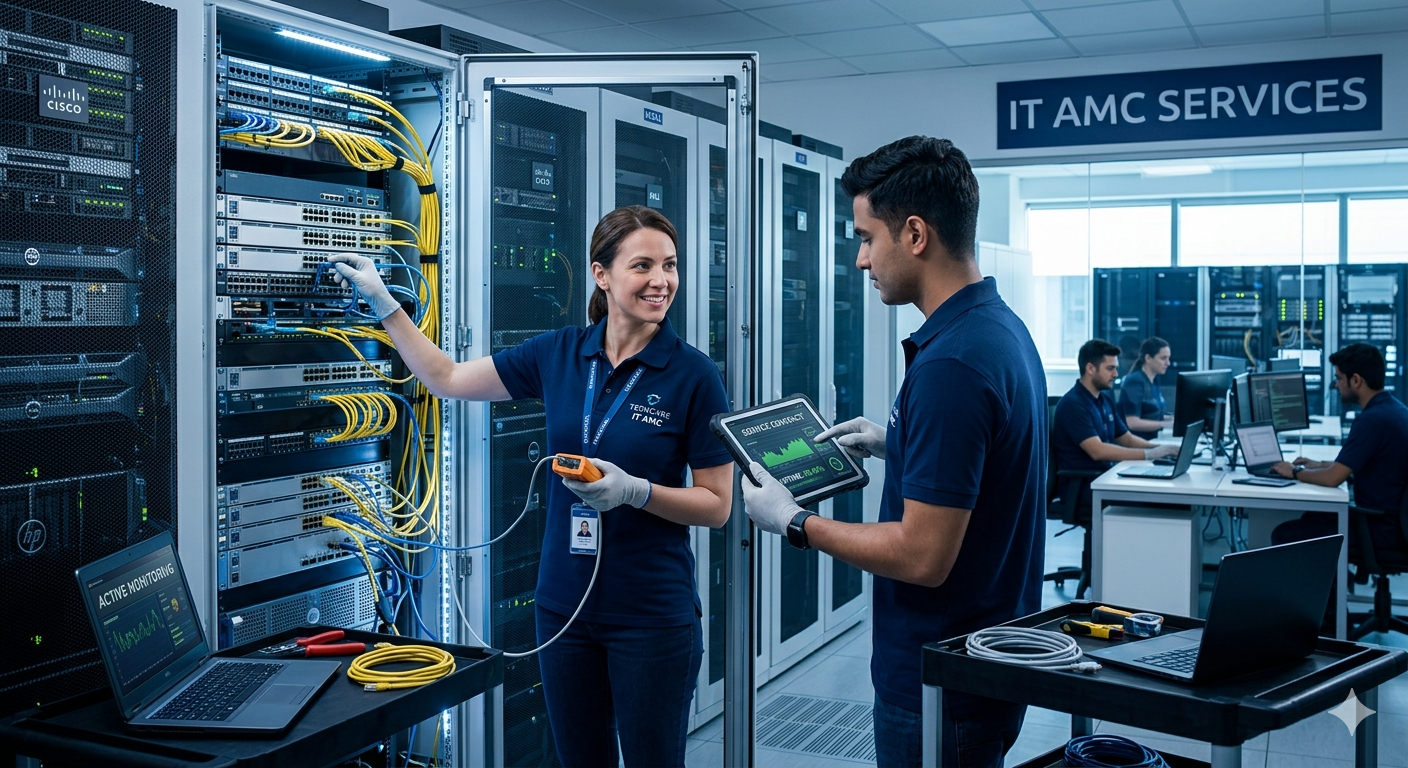
Execution Framework, SLA Compliance & Long-Term Value
Selecting Between Non-Comprehensive and Comprehensive Formats
When engineering an Annual Maintenance Contract, enterprises must select between two primary contractual structures based on their internal risk tolerance and capital availability: Comprehensive AMCs and Non-Comprehensive AMCs.
A Comprehensive IT AMC is an all-inclusive service contract where the service provider supplies both the technical labor and the absolute cost of any replacement hardware components, spare parts, or peripheral equipment required to restore a system to operational health. If a critical corporate server power supply or a high-end workstation motherboard fails completely, the client incurs no added expenses for parts procurement. This format transfers the operational and financial risk entirely to the IT partner, making it the ideal selection for mission-critical setups that cannot tolerate long procurement delays.
Conversely, a Non-Comprehensive IT AMC covers solely the technical expertise, advisory services, routine check-ups, and diagnostic labor charges. Under this model, if a hardware component degrades and requires replacement, the cost of purchasing the new physical asset or spare part is billed independently to the client. This format features a lower initial baseline contract cost and is best suited for businesses with internal spare-parts reserves or non-critical operational environments where temporary hardware downtime does not directly impact the bottom line.
The Critical Importance of Service Level Agreements (SLAs)
The operational backbone of any professional IT maintenance contract is its integrated Service Level Agreement (SLA). The SLA is a binding, quantitative matrix that explicitly outlines the service vendor’s performance metrics, response times, and resolution speed guarantees. It classifies technical incidents based on severity, ensuring clear expectations for both parties.
For example, a ‘Severity 1’ issue—such as an absolute corporate network outage or primary server failure—typically commands a critical response SLA requiring an engineer to respond within 15 to 30 minutes. Minor issues, such as a localized printer driver configuration problem, are categorized under a lower priority tier with longer resolution windows. By establishing clear SLAs, elite service organizations like Dar Al Montazah Technical Services LLC give businesses ironclad transparency and operational accountability, guaranteeing that critical technical failures are addressed with the appropriate urgency.
Strategic Long-Term Value and Choosing the Right Partner
Beyond immediate technical support and troubleshooting, an IT AMC serves as a high-value mechanism for long-term strategic IT planning. A professional IT partner does not simply respond to issues; they actively analyze historical support ticket patterns, pinpoint recurring infrastructure bottlenecks, and deliver insightful asset lifecycle reports. This ongoing technical evaluation assists corporate executives in making data-driven decisions regarding future IT investments, software migrations, and structural scaling pathways, transforming IT from a chaotic cost center into a smooth, scalable engine of corporate growth.
Selecting the ideal technical service vendor requires evaluating several key operational criteria. Organizations must look past baseline contract costs and carefully analyze the provider’s technical credentials, engineering certifications, experience within their industry vertical, and historical reputation for upholding strict SLA metrics. The ideal partner must function seamlessly as a natural, highly integrated extension of your own internal team—possessing deep technological expertise alongside a thorough understanding of your unique commercial environment.
Conclusion: Future-Proofing Your Business Architecture
In an increasingly digital marketplace, corporate agility, speed, and continuous data availability are non-negotiable pillars of market success. Attempting to manage modern, complex IT environments through an ad-hoc, chaotic break-fix approach introduces structural vulnerabilities, unpredictable financial outlays, and significant operational risks.
Investing in a structured IT Annual Maintenance Contract provides modern enterprises with proactive infrastructure protection, predictable financial planning, and immediate access to elite multi-disciplinary technical teams. Partnering with a trusted, premier technical firm such as Dar Al Montazah Technical Services LLC empowers organizations to future-proof their entire technological foundation, fully safeguard their critical operations, and redirect their valuable focus toward sustainable business growth and innovation.