
 Tower, Iris Bay - Office 1705 - Al Mustaqbal St - Business Bay - Dubai

PABX and IP Telephone Systems: The Backbone of Modern Corporate Communication
UNDERSTANDING THE FOUNDATIONS —
Introduction
In the fast-paced, highly interconnected landscape of modern commerce, efficient communication remains the vital engine driving corporate success. Businesses require streamlined, reliable, and scalable communication networks to handle internal collaboration and manage high-volume external client relations. Over the past few decades, office telephony has transformed from basic copper-wired networks to highly advanced digital environments. At the center of this technological transformation are Private Automatic Branch Exchange (PABX) and Internet Protocol (IP) Telephone Systems. For enterprises looking to establish a robust technological foundation, partnering with an expert integrator like Dar Al Montazah Technical Services LLC ensures that these systems are perfectly calibrated to meet modern workplace demands.
What is a PABX System?
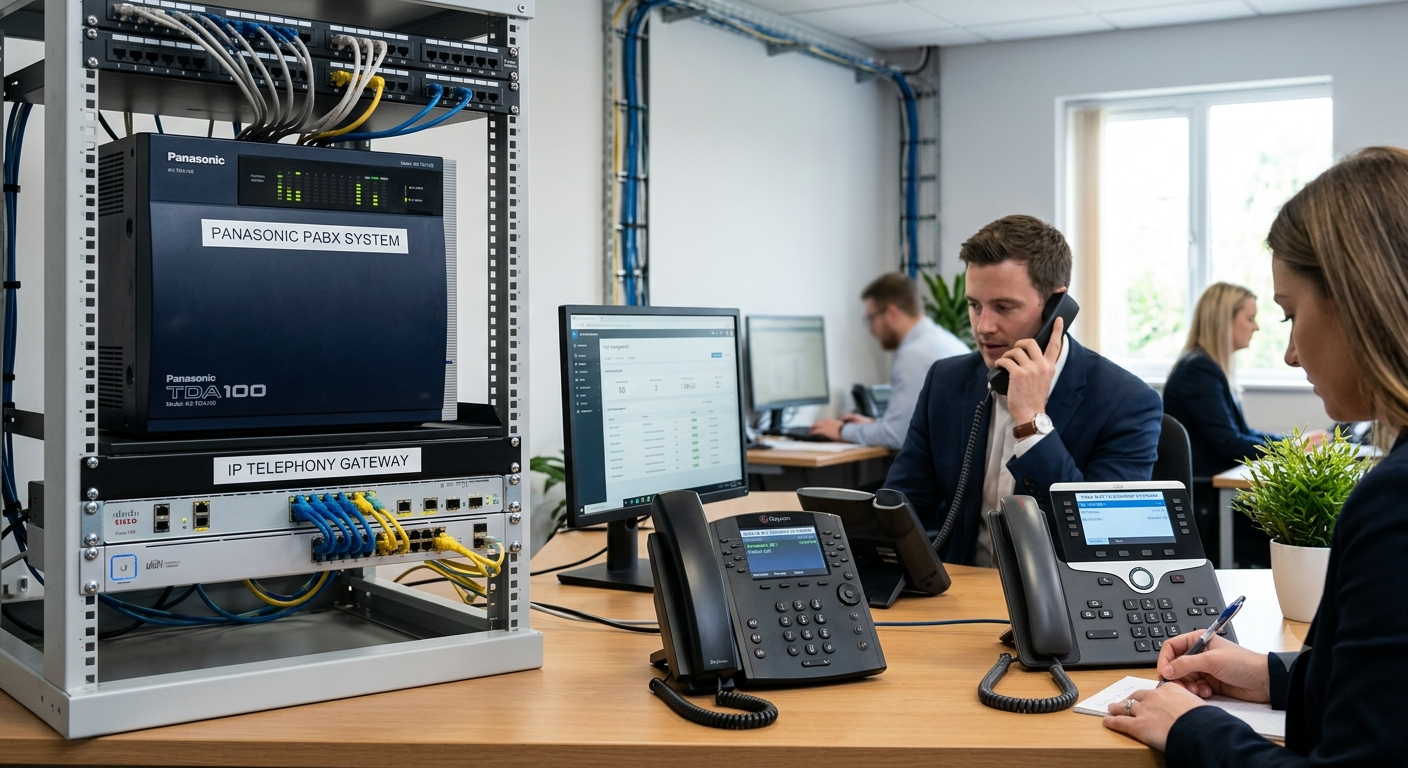
A Private Automatic Branch Exchange (PABX) is a private telephone network used within a company or organization. Unlike standard public telephone lines where every desktop telephone requires a direct, individual physical connection to the public provider, a PABX system allows an organization to manage multiple internal lines through a single centralized switchboard architecture. This system automatically routes incoming calls to the correct extensions and enables internal team members to communicate with one another completely free of charge.
Traditional PABX hardware relied heavily on physical switching boards and public switched telephone networks (PSTN) or Integrated Services Digital Networks (ISDN). While these conventional analog and digital configurations offered remarkable stability for decades, they lacked flexibility. They required costly physical infrastructure expansions, specialized wiring, and technician site visits whenever a business added new staff members or moved physical desks.
The Evolution to IP Telephony
As high-speed broadband internet became the baseline standard for business operations, communication technology adapted by moving voice traffic away from old copper networks and onto data networks. This transition gave rise to IP Telephony and VoIP (Voice over Internet Protocol). Instead of converting voice signals into analog electronic pulses across dedicated telephone wires, IP telephony converts analog audio into digital data packets. These packets travel seamlessly over standard internet connections or local area networks (LANs), recombining instantly back into high-fidelity audio at the receiving end.
This development transformed business telephony by eliminating the need for redundant, separate wiring for internet and voice. By merging voice traffic with existing network infrastructure, companies unlocked unprecedented clarity, significantly reduced call costs, and laid the groundwork for advanced software-driven communication features.
Key Technical Differences Between Traditional PABX and IP PBX
To fully grasp the benefits of modern business communication, it is useful to compare traditional PABX with its modern counterpart, the IP PBX. Traditional PABX relies on dedicated physical hardware switches and traditional copper telephone lines, which limits scalability and binds extensions to specific physical office locations.
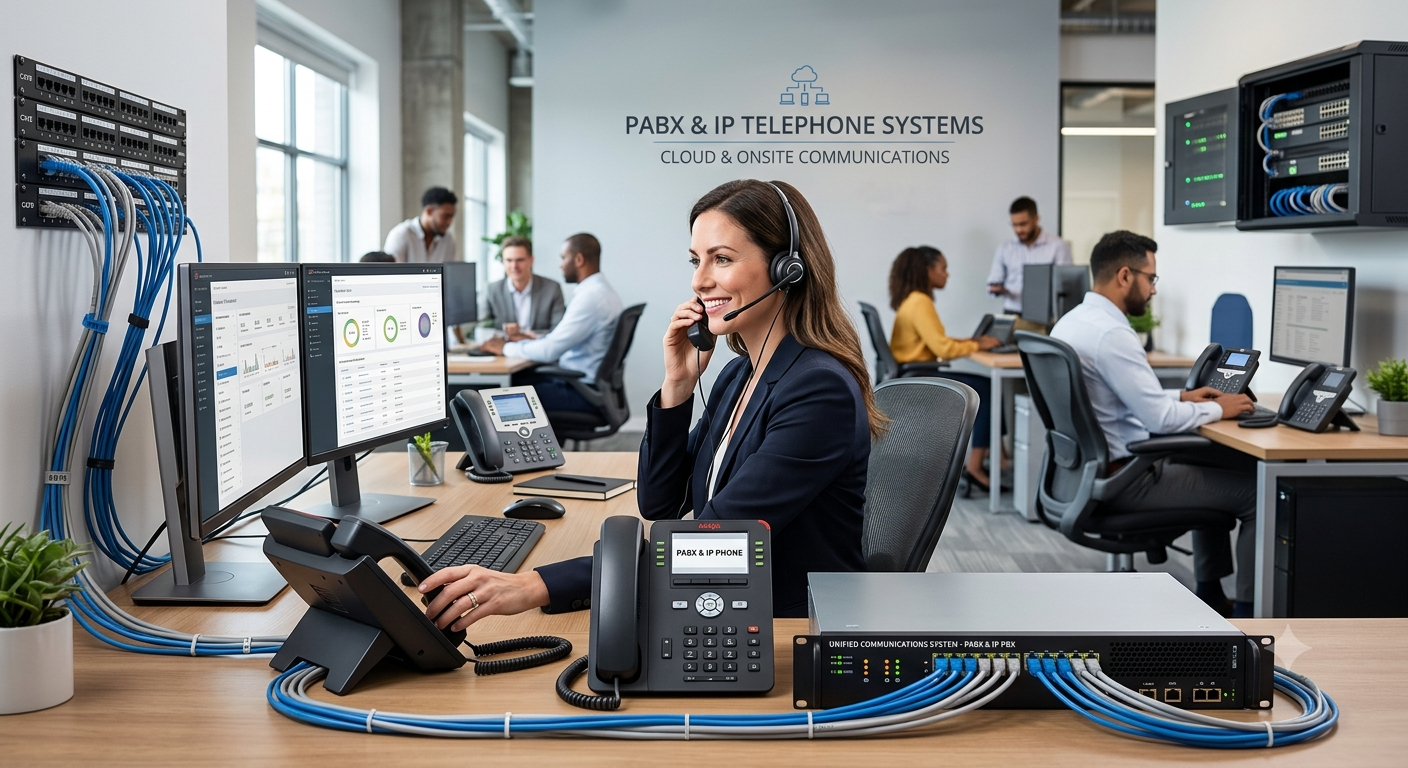
In contrast, an IP PBX is entirely software-driven. It operates on standard network servers or within secure cloud environments, sending voice data over IP networks. While expanding a traditional system requires purchasing physical interface cards and running new cables, expanding an IP PBX simply involves adding software licenses and plugging an IP phone into any available network port. This shift reduces reliance on proprietary hardware, lowers maintenance requirements, and introduces advanced features such as visual voicemail, advanced call queues, and software-based management tools.
ADVANCED FEATURES AND ENTERPRISE IMPLEMENTATION —
The Strategic Advantages of Deploying IP Telephone Systems
Upgrading to an advanced IP telephone system offers exceptional returns on investment across multiple operational dimensions. First and foremost among these benefits is substantial cost reduction. Traditional business lines incur high recurring monthly rental costs from telecom providers, alongside steep rates for long-distance and international calling. IP telephony drastically reduces these expenses by utilizing existing internet connections, enabling businesses to make long-distance and internal office-to-office calls at a fraction of the cost. Furthermore, because the entire architecture runs on a shared data network, administrative costs decrease as separate phone line maintenance becomes a thing of the past.
Another critical advantage is unparalleled operational flexibility and workforce mobility. Traditional desktop phones are locked to a single desk; if an employee shifts offices, their physical phone lines must be manually rewired. Conversely, an IP phone operates wherever there is an internet connection. Employees can unplug their physical IP phone from their desk, plug it in at a remote office or home workspace, and retain their exact extension number, settings, and features seamlessly. Additionally, modern IP PBX platforms support “softphones”—software applications installed on laptops, tablets, or smartphones. This allows remote and mobile team members to make and receive corporate calls on their mobile devices as if they were sitting at their office desks, maintaining a professional corporate identity from any location globally.
Unifying Communications with Modern Business Tools
Modern IP telephony goes far beyond simple voice calls, serving as a core foundation for Unified Communications (UC). Contemporary IP PBX systems integrate smoothly with corporate software suites, including Customer Relationship Management (CRM) platforms, enterprise databases, and email networks.
This integration enables powerful business workflows, such as automatic customer file screen-pops during an incoming call, click-to-dial functionality from browser interfaces, and voicemail-to-email delivery where audio messages arrive directly in user inboxes as accessible WAV or MP3 files. By centralizing voice, video conferencing, instant messaging, and customer records into one cohesive digital environment, organizations can eliminate operational friction and greatly enhance staff productivity.
Scalability and Future-Proofing Corporate Networks
For growing enterprises, scalability is an essential requirement for all technology investments. Traditional phone systems often present expansion hurdles, forcing companies to over-provision capacity early on or face expensive hardware overhauls when expanding teams.
IP telephone platforms resolve this challenge by offering modular, on-demand scalability. Adding a new user is as quick as provisioning an extra software license and connecting a compatible SIP/IP handset to the local network. Whether a business expands by five employees or opens multiple international branch offices, a centralized IP PBX can effortlessly scale to accommodate growth without disrupting daily operations, protecting the company’s initial technology investment for years to come.
Choosing the Right Integration Partner
Deploying a PABX or IP telephone system requires deep expertise across network design, quality of service (QoS) engineering, firewall configurations, and hardware provisioning. To achieve crystal-clear voice quality and dependable uptime, businesses need a dedicated technology partner capable of designing and maintaining a tailored solution.
As a trusted leader in telecom installations, Dar Al Montazah Technical Services LLC delivers comprehensive end-to-end communication services. From initially auditing network readiness and configuring secure IP PBX architectures to deploying high-quality desktop IP phones and providing ongoing technical support, Dar Al Montazah Technical Services LLC empowers modern organizations with the robust, future-proof communication infrastructure required to thrive in a competitive market.